Chimneys on Long Island face a unique set of challenges that many homeowners don't fully appreciate until damage becomes visible. Glen Head sits in Nassau County, where winter temperatures swing sharply and moisture from proximity to Long Island Sound creates cycles of freeze-thaw stress. These conditions attack mortar joints relentlessly. When you combine seasonal freezing with salt-laden air drifting inland, masonry deteriorates faster than in inland regions. This is why Glen Head residents should think of chimney maintenance as important, not optional.
Mortar joints are the first line of defense in any chimney system. These joints hold individual bricks together and seal out water and air. Over time, weather exposure causes mortar to crack, crumble, and separate from the surrounding bricks. In Glen Head, many homes were built between the 1950s and 1980s, when original mortar formulas varied widely. Some mortar mixes were softer than ideal. Others absorbed moisture too readily. When these original joints fail, water begins to penetrate behind the brick face, reaching the chimney's interior structure and the framing inside your home.
Brick damage manifests in several ways that Glen Head homeowners should recognize early. Spalling occurs when the outer layer of brick begins to pop off, creating small divots and chips across the chimney face. Efflorescence appears as white, chalky deposits on brick surfaces. Cracks running horizontally or vertically signal structural movement or freeze-thaw damage. These aren't just cosmetic issues. Each one represents an opening where water can enter. Once water gets behind the brick, it causes rust in metal components, rot in wooden framing, and deterioration of the chimney's internal systems.
Water intrusion is perhaps the most destructive problem affecting chimneys on Long Island. Winter snow and rain don't simply fall straight down. Wind drives precipitation sideways against chimney walls. Water seeps into cracks in mortar joints and brick. It travels down the exterior, looking for the path of least resistance. Once inside, it saturates the chimney structure from within. Glen Head residents often don't realize water damage exists until they notice staining on interior walls, soft spots in drywall near the chimney, or mold developing in adjacent closets or attic spaces. By that point, the damage has usually progressed significantly.
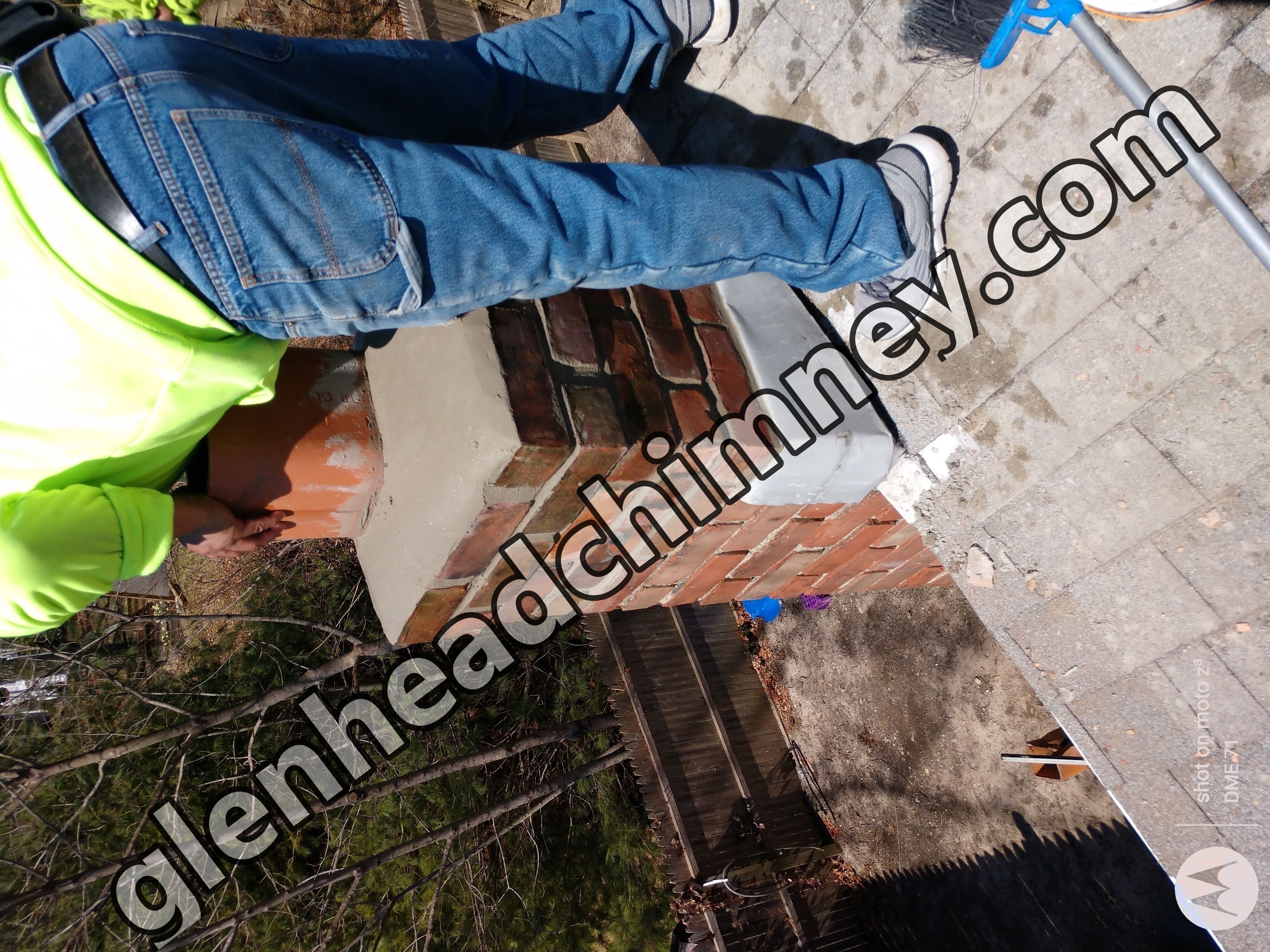
Structural integrity of your chimney depends on a sound foundation, properly aligned brick courses, stable mortar joints, and an intact chimney crown at the top. The crown is a concrete or mortar cap that sits atop the chimney, sloping slightly to shed water away from the masonry below. Cracks in the crown allow water to pool and seep downward. Inadequate slope means water pools on the flat surface instead of running off. Missing sections leave the chimney completely exposed. For homes in Glen Head that rely on oil heat and traditional fireplaces for supplemental warmth, a compromised chimney crown creates immediate risk during the heating season.
DME Maintenance has spent over 2001 diagnosing and repairing chimneys throughout Glen Head and the surrounding areas of Nassau County, NY. We approach every chimney repair with a focus on addressing root causes, not just surface symptoms. Our process begins with a thorough inspection using modern equipment. We evaluate mortar joint condition, brick integrity, water penetration patterns, and structural alignment. We look at the chimney crown, flashing where the chimney meets the roof, and the interior condition if accessible. This detailed assessment helps us create repair plans that actually solve problems rather than patch them temporarily.
Repointing deteriorated mortar joints is one of the most important services we provide to Glen Head homeowners. This involves carefully removing failed mortar to a specific depth, typically about two to three times the joint width. We then fill those joints with new mortar that matches the original in color, composition, and strength characteristics. The work requires skill and attention. Mortar that's too hard can damage surrounding brick. Mortar that's too soft won't protect the chimney properly. The joint must be properly packed and finished to shed water effectively. When done correctly, repointing restores the chimney's weather resistance for decades.
Brick replacement addresses sections where individual bricks have deteriorated beyond repair or where spalling has created structural weakness. We carefully remove damaged bricks, clean the surrounding cavity, and install new bricks that match the original in size, color, and texture. This is precision work. Improper brick selection or installation creates visible gaps and mismatches that affect both function and appearance. For Glen Head residents who value their homes' character and curb appeal, quality brick work matters as much as the structural benefits it provides.
Chimney crown repair or replacement becomes necessary when cracks allow water intrusion or when the crown was improperly designed or installed. A properly constructed crown should extend beyond the chimney wall by at least one and a half inches on all sides. It should slope toward the edges so water runs off quickly. It should be thick enough to resist cracking but constructed from materials that won't trap moisture. When a crown fails, water penetration accelerates dramatically. Replacing it properly is one of the most valuable investments a Glen Head homeowner can make for long-term chimney health.
Flashing repair prevents water from entering where the chimney meets the roof. This metal barrier should be installed in overlapping layers that direct water down and away from the chimney base. Improper flashing installation, deterioration of the metal, or separation from the chimney allows water to flow directly into the gap between chimney and roofing. Glen Head experiences heavy seasonal rain and nor'easters that test flashing integrity. Correcting flashing problems protects not just the chimney but also the roof structure and interior spaces adjacent to the chimney.
The seasonal weather patterns on Long Island create cyclical stress on chimneys. Winter freezing forces water trapped in mortar joints to expand, widening cracks and forcing mortar out. Spring thaws and heavy rains saturate the structure. Summer heat and humidity promote mold and efflorescence. Fall preparation for winter heating season often reveals damage that developed over months. Homes in Glen Head need chimneys that can withstand this full cycle repeatedly without accelerating deterioration. Proactive repair during favorable weather seasons means your chimney reaches winter in optimal condition.
DME Maintenance serves every street in Glen Head. We have been cleaning chimneys on Long Island long enough to know exactly what local homes need — from older clay-lined flues in pre-war houses to modern stainless steel liner systems in newer construction.
Homeowners often wonder whether they should address chimney damage immediately or wait until it worsens. Our experience shows that early intervention nearly always costs less than delay. A small crack in mortar joints costs far less to repoint than allowing water to penetrate the structure, freeze inside it during winter, and create damage extending feet into surrounding masonry. A failing crown is inexpensive to replace before water damage affects the roof or interior framing. Brick damage caught early might require replacing a few bricks. Ignored, it can compromise the entire chimney's structural integrity.
If you own a home in Glen Head and haven't had your chimney inspected recently, now is the time to schedule one. Contact DME Maintenance at 516-690-7471 to arrange an evaluation. Our licensed professionals will assess your chimney's condition, explain what we find, and recommend appropriate repairs. We've been serving Glen Head and Nassau County, NY homeowners since 2001, and we understand the specific challenges chimneys face in this region. Don't wait until water damage forces expensive repairs. Call 516-690-7471 today.